
Growing up, it felt like there was only one acceptable path: college.
“Join extracurricular activities to get into a good school.”
“Get more involved with your student council.”
“UCs are the best!” was repeated so often at school that it began to sound less like advice and more like a requirement.
I don’t fully regret attending the University of California, Los Angeles. I majored in English with a minor in Chicano Studies. I learned a lot. I refined my writing, reading, and comprehension skills. And the humanities hold a certain sparkle that I hope it never loses.
Let’s get back to the expectations I grew up with.
Pre-K Through Middle School
I live in South Central LA and grew up in the Los Angeles Unified School District system.
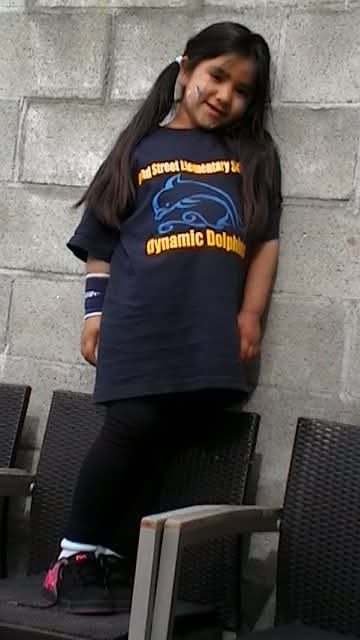
I remember when we were culminating from elementary school, they let us say what college/university we wanted to go to and what we wanted to be as we took our certificate of completion for the sixth grade.
Yes, my elementary school was weird, and I went up to 6th grade, which meant we were thrown smack dab into the middle of middle school.
My teachers in elementary only ever spoke about UCLA and USC.
When College Day rolled around, every Friday, that’s all you’d see.
My teachers in elementary only ever spoke about UCLA and USC. When College Day rolled around, every Friday, that’s all you’d see.
Around 3rd grade, my oldest sister left for Humboldt State University, now known as California State Polytechnic University, Humboldt. Because of her, I knew there were more schools out there. I also knew about ELAC, our local community college, because my mom was taking classes there while I was growing up.
Of course, I now understand why. USC and UCLA are top Los Angeles universities with such an intense rivalry, and most LAUSD schools like taking sides.
While everyone in my class of 2015 said UCLA or USC, I said, “When I grow up, I want to go to Johns Hopkins University to be a surgeon”.
Seems I had high hopes for myself. Might’ve been in the height of Grey’s Anatomy as well.
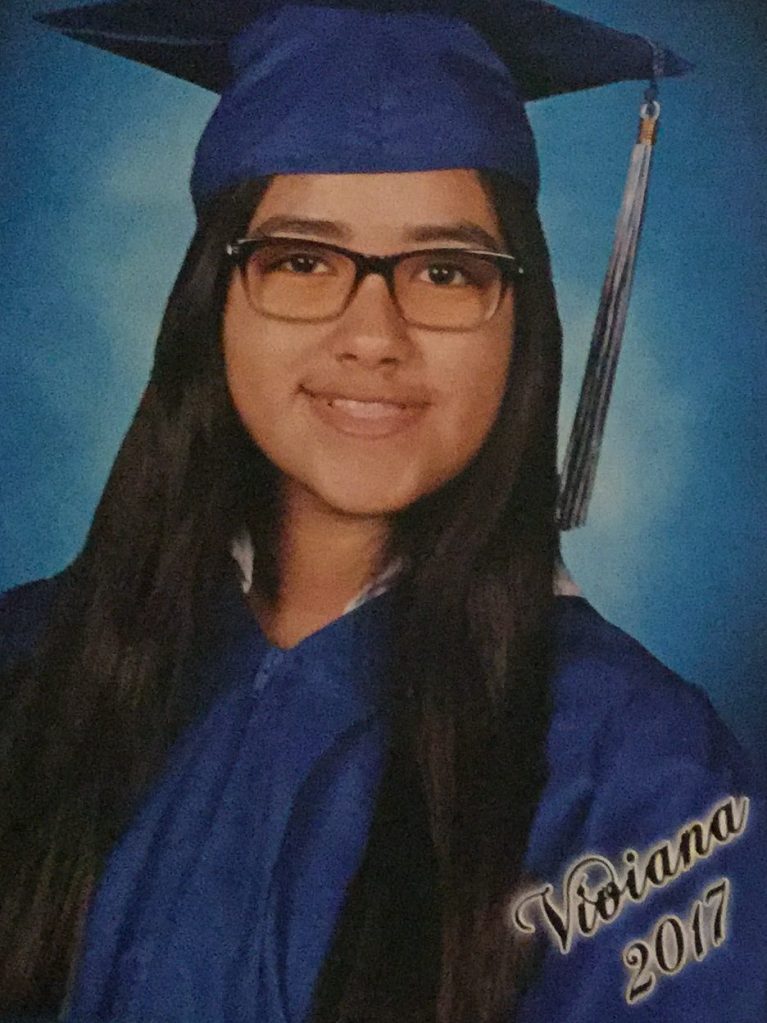
As for middle school, aside from the usual dislike for my time there, teachers were brutally honest.
My favorite teacher disclosed to us that “Middle School doesn’t count, no one will ever see these grades for college.”
That revelation shattered the way I had understood school up until then.
But middle school really does build your foundation for high school, so don’t read this and decide to flunk middle school. I beg you.
High School Before COVID
This is where school stopped feeling exploratory and started feeling transactional.
I had been placed in honors and advanced classes for as long as I could remember, but the intellectual hierarchy that schools create can be incredibly isolating.
My 9th grade class was basically the school’s personal guinea pig cohort.
We were placed into an AP class, giving us our first taste of college-level coursework .
Let’s just say being thrown into college-level coursework at fourteen did not inspire confidence. We were given AP human geography before ever taking regular geography. My experience here was so bad that I never wanted to take an AP class again, but I did.
We were told we were the first group of 9th graders to take this class. It was a fairly new course, and it was my teacher’s second year teaching this AP class. Needless to say, I can count the number of people who passed the AP exam on one hand.
Honestly, our teacher didn’t foster the best learning environment. He told us that our second semester of 9th grade is what really matters for colleges, so a lot of people mentally checked out. This may not be the same today, though.
By day two of freshman year, I figured out they grouped our classes, so we were stuck seeing the same faces all day. When I wanted to trade classes, counselors gave me hell because they didn’t want me to lose my honors standing classes. Maybe ungrouping me from my cohort for 2 periods was detrimental to my counselor, but it worked out in the end.
Two things were strongly emphasized by the time we were nearing 9th grade. ELAC courses were offered to our high school for free, and extracurricular activities were highly recommended.
I’m not one to commit to several different activities just to look good on paper for a college, so I stuck to things I knew I could commit to for the next 3 years.
My free periods were filled with AP and other academic courses the school believed would benefit me more than art, woodshop, or even mandatory health classes.
It was difficult to advocate for my own class schedule. Counselors constantly questioned my decision to want to take graphic design or art classes, so I had to look outside of classes to find the outlet I needed.
I had joined my marching band’s color guard team by the end of my 9th-grade year, and I absolutely loved it. The friendships built there and the experience of being part of a team were amazing. We weren’t the greatest team, and I wasn’t the best at it, but I’ve never enjoyed an outdoor/indoor sport as much as this. And yes, I consider it a sport.
I had joined my marching band’s color guard team by the end of my 9th-grade year, and I absolutely loved it.
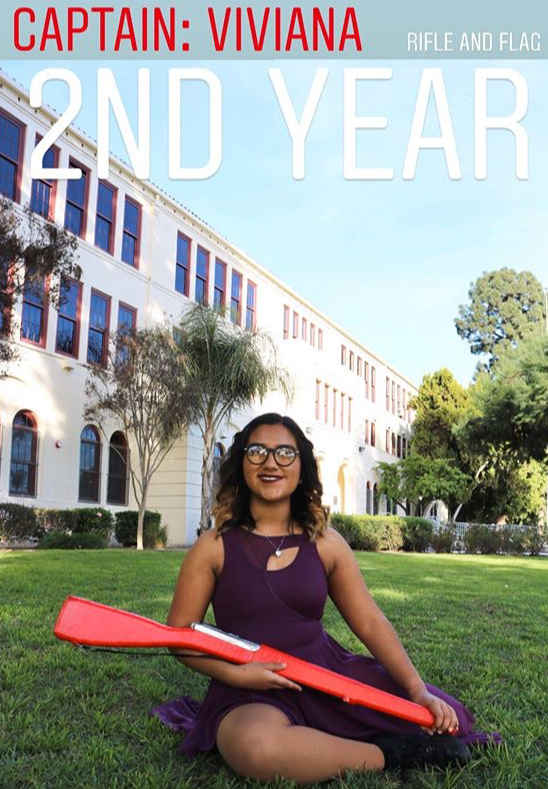
The friendships built there and the experience of being part of a team were amazing. We weren’t the greatest team, and I wasn’t the best at it, but I’ve never enjoyed an outdoor/indoor sport as much as this. And yes, I consider it a sport.
I was also in a drawing club with some other friends and took two ELAC courses before fully committing myself to the Guard Life. This was my only escape from academics, and while it made me stand out on paper for college apps, it was something I truly enjoyed and continued to explore in my freshman year at UCLA.
Juggling classes with a sport is difficult. You run into exhaustion and start to prioritize different things. The more enjoyable things .
When my coaches started to notice some of us struggling to keep up with classwork, they started dedicating one day of practice to our schoolwork. Those who didn’t need it as much were able to refine their flag or rifle work.
Once 11th grade rolled around, the burnout was real, and sleep deprivation became normal. AP Calc was kicking my ass and making me second-guess a career in medicine.
During my entire high school career, I had only heard of vocational trade schools once. That was in the graphic design class I almost didn’t get.
There’s a connotation associated with trade schools. One I still have despite knowing better.
Trade schools seemed taboo growing up, not in my home, but at school. That’s partly because traditional academic pathways were emphasized more heavily since trades weren’t framed as prestigious or intellectually valued in the same way.
If schools spoke more openly about trade schools and educated students on how to identify credible programs, things could be different for a lot of students. Even something as simple as providing lists of local accredited programs could help.
My graphic design teacher touched on this once briefly. It was right around the time when I had to start taking my school options very seriously.
Needless to say, in 11th grade, after one brief talk about trade schools, I didn’t give them much thought and kept looking for what colleges I wanted to apply to.
I’m skipping over the majority of 11th and 12th grade because COVID did that to me.
High School During COVID
Looking back, I misinterpreted something my mom told me during COVID, along with everything else happening in my life at the time.
My mom works in LAUSD as a paraprofessional, in a middle school, and told me that teachers were going to give us a grade based on our last in person classes rather than everything after. Hearing that made me stop taking school as seriously during the second semester of 11th grade.
Despite teachers being concerned by my uncharacteristic lack of effort, my grades were just as my mom said they’d be.
My change in school wasn’t fully COVID or my mom’s comment; I was dealing with a lot of personal things.
My dad was incarcerated around 10th-11th grade. This severely impacted my emotional state and definitely influenced a large part of my high school years.
My mom was having ongoing kidney issues, and they hit a new high during the pandemic. She had multiple surgeries and hospital stays throughout high school, and seeing her go through this while taking online classes was difficult and distracting.
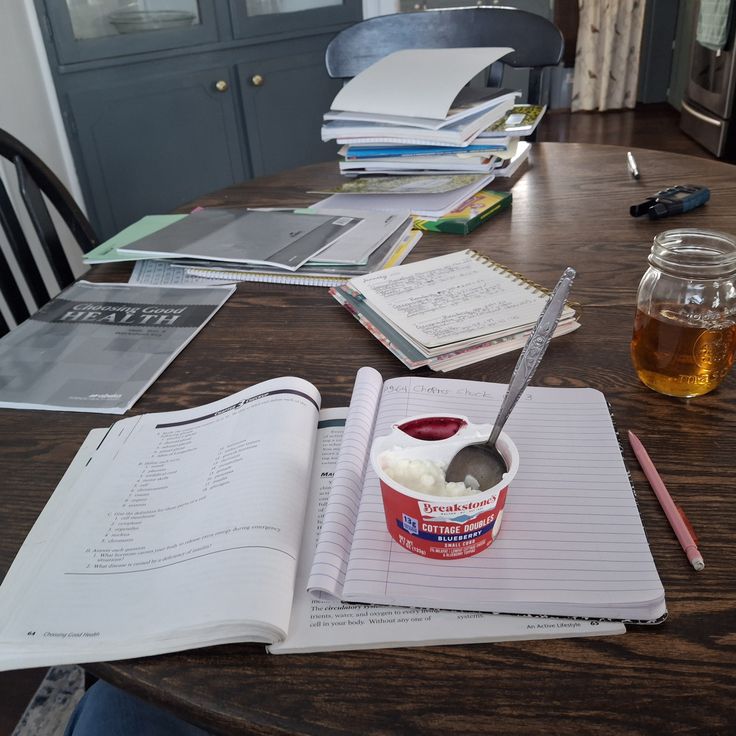
Technical difficulties during the very beginning of the pandemic were common. So classes were unpredictable at first.
I no longer had the set 7am-3:30pm school schedule I was used to since elementary school. This was a learning curve for educators and students.
Senior year was somewhat better. There were still technical difficulties, but I adjusted far better than in 11th grade.
I was put in a Biomedical class, and my teacher told us on day one that she, along with the counselor, had hand-picked us, seniors/juniors, for this new course.
The overall idea was that it’d be kind of like a 4-year cohort of the same group with the same teacher, but I guess they needed a more mature class to see how this class would be handled in theory.
Being surrounded by other honors and AP students constantly shifts your perception of what “smart” even looks like.
I spent most of high school feeling academically average because everyone around me was equally high-achieving.
High school felt like a constant competition: stack extracurriculars, maintain teacher relationships, volunteer, stay visible, and keep your grades high.
My peers stood out more in classes by participating and had way more extracurriculars on their plates than I did. So yes, I considered myself academically average till my teacher said this.
I had also found out I was given an extra course in 12th grade.
My counselor never made health class a priority for me, so I was assigned to take it online in an accelerated version so that I could graduate.
I don’t feel like I benefited from the online asynchronous course. I believe Health class is essential for students, which is why they normally give it to 9th and 10th graders, but my accelerated courses were much higher on the agenda for my counselor than health was.
At the time, my younger cousin had already taken it in person, so I had him help me out with the rougher parts of this course since textbooks were not provided during the pandemic. Once I completed this course, I was right on track to graduate again.
Application Season
I missed out on almost everything people romanticize about senior year. I no longer had extracurriculars to look forward to, and the beginning of senior year was all about college apps.
In my school, the application season starts in 11th grade. We fill out a packet, with guidance from our seniors, that prepares us for PIQs, and that we can give to teachers in preparation for letters of recommendation.
However, COVID drastically changed the system our college counselor had set up for us.
During my application season 2020-2021, we no longer needed SAT and ACT scores;
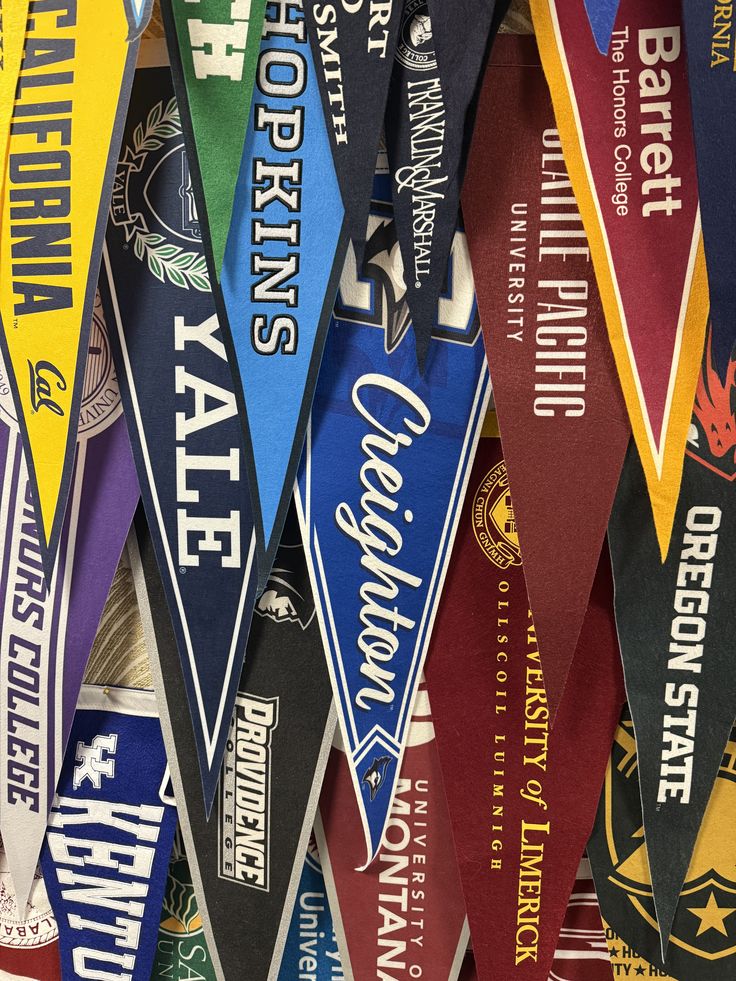
it was optional, and only a handful of colleges required them. I greatly benefited from our college counselor.
To this day, I believe if it weren’t for her, I never would’ve gotten accepted into all my schools. Well, almost all, but I still count the University of California, Berkeley waitlist as an in.
Sometimes I look back and wonder why my friends weren’t given the same support as I was when applying to schools. I unfortunately saw one friend breaking down after visiting the same college counselor who worked with me.
Instead of polishing up her application as she did with mine, she absolutely tore her apart, telling her, “Don’t even bother applying; schools won’t get you”.
My heart broke for her.
College is quite literally all that’s talked about in K-12. We never hear about other paths, and you’re going to tell her to throw her senior year away and not even try, despite applications being free for our school.
We thankfully had amazing support from our color guard coaches, and they convinced her to apply, which she did, and got into CSUDH.
Going back to my application season, because we were remote, I think it made it easier for our college counselor to meet us one on one and give us personal advice on how to fix our applications.
Although to me it wasn’t advice, they were necessary changes I had to make to better my chances. And it worked.
I had applied as a psych major to all the schools I applied to. No longer wanted to pursue medicine since it involved more math than I was comfortable with.
I hadn’t considered out-of-state colleges like Johns Hopkins University since they were too far, too expensive, and the pandemic was still too fresh.
How College Opened my Mind
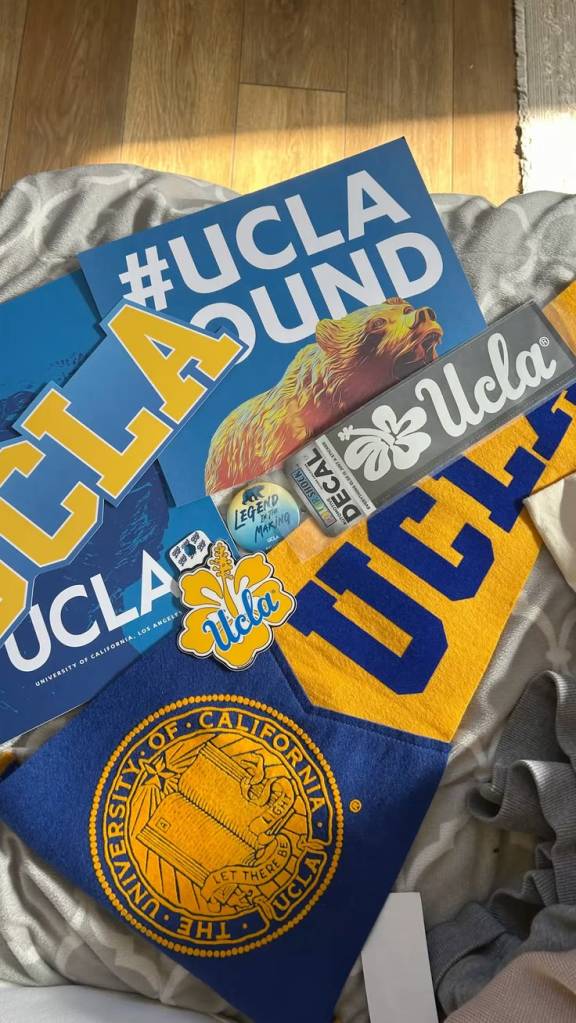
I started off my college experience with the Freshman Summer Program, a six-week introduction to what college feels like, but online. One Seminar greatly stood out to me.
We were taught the differences between UCs and Cal States, as well as some other things. But this class opened my eyes and made me realize just how little high school prepared us for college
I didn’t know UCs were heavily research-based , relied more on graduate student teaching assistants than on the professors, and had an overall larger student-to-teacher ratio .
There was so much more this class covered, and I had to wonder why my high school didn’t tell us this.
No one explained why someone might genuinely thrive more in one educational environment over another. Trade schools were rarely discussed outside of brief mentions. Community college was often framed as a backup rather than a financially smart or flexible option.
Even though UCs and Cal States were constantly name-dropped, I didn’t fully understand how different those experiences actually were until I was already attending one.
Here’s my understanding of the options we have so far, based on friends and family.
There are those who are able to enter the workforce immediately through connections or by consistently applying to jobs. My cousin was fortunate enough to know people in construction, and after about 5-6 years in this field, he is now taking classes to be in the Union.
Then there are those who choose a trade. My cousin found his passion and pursued a certification to become a licensed barber. He absolutely loves his job, and I am so jealous yet happy that he found his passion at such a young age. Something that takes most a lifetime to figure out took him a couple of years to get his foot into.
My sisters (twins) were at cal states but due to life circumstances had to drop out. One graduated from ELAC, our local community college, transferred to Cal State LA and now we share the same graduation class of 2025. The other took time off of school but returned and is to be class of 2026 from her local community college.
I, along with many friends, took a 4-year degree path from UCs or Cal States.
This wasn’t just a flaw within my school, but in the way many schools are structured. College is almost shoved down our throats, while those in mixed courses or regular courses are discouraged from even applying to college, despite LAUSD qualifying their students for waivers.
I realize there was never one correct path, only the illusion that there was. Some of us found our footing through four-year universities. Some go through community college. Some work. Some through trades. Some had to stop and restart. Some are still figuring it out. What I wish schools had taught us wasn’t which path to choose, but how to understand what each path could offer us.


Leave a comment